Septic Drain Field & Field Line Repair in Fletcher, NC
Failed or saturated drain field in Hendersonville & Fletcher, NC? Soggy yard, standing water, or odors over the lines — we diagnose the real cause and give you a straight repair-vs-replace answer.
Drain Field in Fletcher
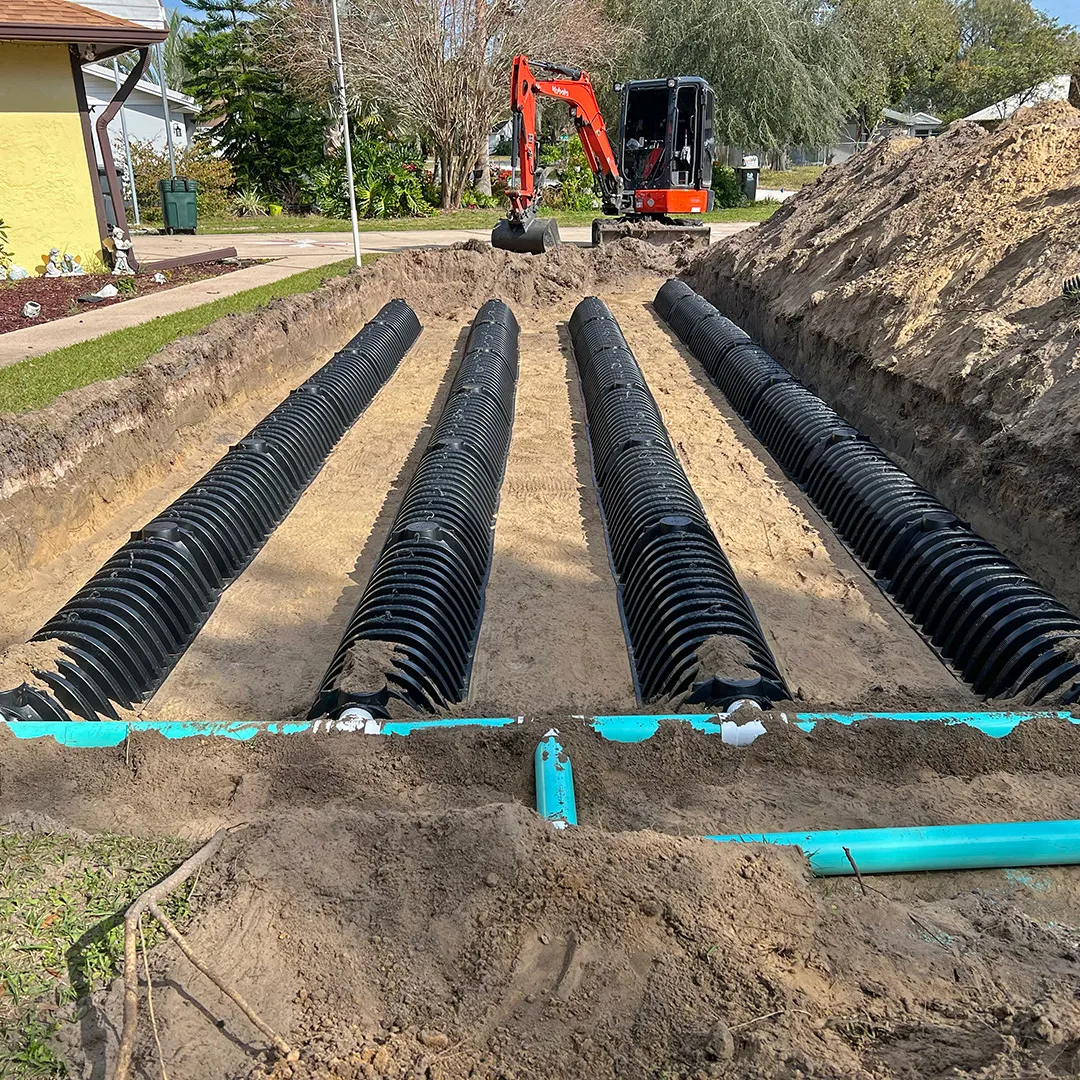
Septic drain field and field line repair in Hendersonville & Fletcher, NC starts with an honest diagnosis, not a tear-out. The drain field — also called the leach field or field lines — is where treated water from the tank soaks back into the ground, and it is both the most important and the most expensive part of a septic system. When a field fails or the ground stays saturated you see it in the yard: spongy or standing water over the lines, lush green grass in strips, sewage odor outside, slow drains in the house, and eventually backups. We diagnose and repair drain field and field line problems across Hendersonville, Fletcher, and the rest of Western North Carolina. A lot of field trouble is not a dead field at all — it is a tank that overflowed solids into the lines, a failed pump, a crushed or root-clogged field line, or simply ground saturated from our heavy mountain rains. We find the real cause, and where the field itself is the problem we repair, restore, or rebuild the failed lines rather than assuming the whole thing has to be torn out — so the repair-vs-replace call is an honest one.
Septic service in Fletcher
Fletcher sits in the Cane Creek valley between Asheville and Hendersonville, straddling the Buncombe–Henderson county line along the busy US-25 corridor near the regional airport. It has grown fast, with subdivisions and new homes filling in around older farmland, and while parts of town have sewer, plenty of the homes — especially out toward Cane Creek, Mills River, and the rural edges — run on septic. We pump, clean, repair, and inspect residential systems throughout the Fletcher area. The mix here is suburban and rural at once: newer homes on lots subdivided from farm tracts, and long-owned properties with older tanks. We see drain fields working in the valley’s clay soils, tanks overdue on homes that changed hands without records, and the usual demand for inspections as properties sell in this fast-moving market. We know the Cane Creek and Mills River area, how its soils handle a drain field, and how to find and service a tank without tearing up a yard. Tell us where your tank is and what it is doing, and we will give you a straight answer and a real price.
- Diagnosis of standing water, odors, and soggy ground
- We rule out tank, pump, and line problems before condemning a field
- Crushed, clogged, and root-invaded lines repaired or replaced
- Distribution box checked and rebuilt for even flow
- Honest call on repair vs. rebuild — no needless tear-outs
- Guidance on protecting the field from saturation and overload
Need drain field elsewhere? See all of our Fletcher services or drain field across Western North Carolina.
Drain Field in Fletcher
Tell us what’s happening and we’ll call you back — local Fletcher service.
Areas We Cover in Fletcher
In town or up a cove — if it’s in or around Fletcher, we come to your property.
- Cane Creek
- Mills River
- Royal Pines
- Fanning Fields
- Livingston Creek
Common Septic Issues in Fletcher
The septic problems we see most around here — and how we handle them.
Fast growth and a hot resale market
Fletcher has grown quickly and homes change hands often, frequently with no record of the last septic service. A pump and inspection at the sale — or right after — gives buyers and sellers a clear, honest picture of the system instead of an expensive surprise later.
Drain fields in valley clay soils
The Cane Creek and Mills River valleys have clay soils that drain slowly, which is hard on a drain field, especially after a wet stretch. Pumping on schedule so solids never reach the field is the best way to protect a field working in tough ground.
Older tanks beside newer subdivisions
Fletcher mixes new subdivisions with long-owned farm homes, and the older properties often have undersized, decades-old tanks. Those systems need regular pumping and a look at the baffles to keep a small issue from becoming a field failure.
Drain Field in Fletcher — FAQs
Do you serve Fletcher and the Cane Creek area?
I’m selling my Fletcher home — do I need a septic inspection?
My drains are slow — is it the tank or the field?
There is standing water and a smell in my yard — is my drain field dead?
Can a failing drain field be saved, or does it have to be replaced?
How do I keep my drain field from failing?
Also Serving Near Fletcher
Need Drain Field in Fletcher?
Call now for a fast quote — we come to your property, and backups and emergencies get priority.